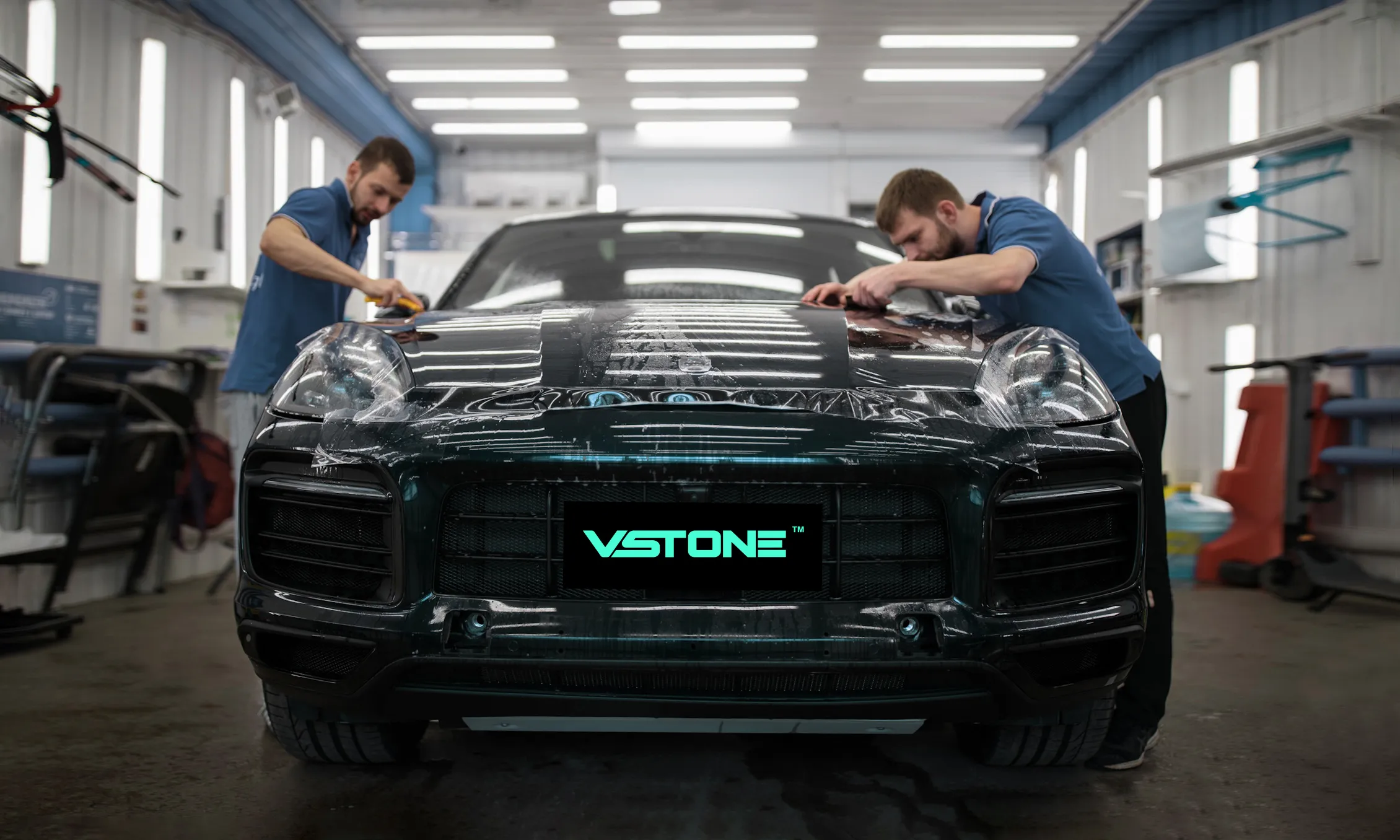

“Can you protect this matte finish without changing how it looks?”
The customer steps back, watching how the surface reacts under natural light.
“I really don’t want it to turn glossy later. I’ve seen that happen before.”
That pause right after the question is something many installers and distributors recognize instantly. Matte PPF should be the obvious solution, yet experience has taught you to be careful. Not because the demand isn’t there, and not because the installation is unfamiliar, but because you know how fragile the promise of “unchanged matte” can be once the car leaves the shop and enters the real world. Heat, sunlight, washing, seasonal temperature shifts—these are variables no installation bay can fully control.
Matte paint protection film doesn’t usually fail in a dramatic way. It fails quietly. A panel begins to reflect light just slightly differently. The surface feels smoother than it used to. The customer can’t always explain what’s wrong, but they know something has changed. And when that moment arrives, the pressure lands squarely on the person who recommended the film.
When Matte PPF Stops Being a Product and Becomes a Risk
This is where matte PPF starts to affect more than just appearance—it affects confidence. Gloss films allow for small imperfections and visual forgiveness. Matte finishes do not. Every stretch, every reposition, every heat activation leaves a trace that may not show immediately but can surface later under different lighting or environmental conditions. When a customer returns weeks or months later with questions, it often feels like you are defending a result you no longer fully control.
The After-Sales Reality Most Professionals Face
The most frustrating part is that these issues are rarely clear-cut defects. The film still protects the paint. The installation followed proper procedures. Yet the visual result no longer matches the expectation set on day one. In warmer climates, repeated heat exposure can subtly smooth the surface, creating areas that appear slightly glossier. In colder regions, stiffness can lead to stretch marks that never completely recover. For distributors supplying multiple markets, this inconsistency becomes even harder to manage. The same matte PPF performs acceptably in one region and becomes a source of complaints in another, making it difficult to scale with confidence.
Why Matte PPF Changes After Installation
To understand why these problems persist, it’s important to look beyond installation technique and focus on how matte PPF is designed. Many products on the market achieve their matte appearance primarily through surface treatments. This approach works well in samples, showrooms, and short-term evaluations, but it also places the matte effect on the most vulnerable part of the film. Over time, washing, UV exposure, environmental contaminants, and repeated self-healing cycles begin to alter that surface texture.
The Critical Difference Between “Matte on Day One” and “Matte Over Time”
A matte PPF that relies on surface texture alone is inherently unstable. Each heat cycle, each cleaning process, and each environmental exposure introduces microscopic changes. Individually, these changes are almost invisible. Collectively, they reshape how light reflects across the surface. This is why two panels installed weeks apart can begin to look different, even when everything was done correctly. At that point, no amount of installation skill can restore uniformity—the film simply wasn’t engineered to maintain matte integrity under long-term stress.
Rethinking Matte PPF for Global Market Use
For matte PPF to work as a scalable solution, it must be approached as a performance system, not a cosmetic variation. The matte effect needs to be engineered into the TPU structure itself, allowing the film to stretch, recover, and self-heal without altering its visual characteristics. When elasticity, particle distribution, and surface stability are balanced at the material level, predictability replaces guesswork. Installers gain consistency from panel to panel, and distributors gain confidence from batch to batch.
What Global Markets Actually Demand
Across global markets, the expectations are remarkably similar. Installers want films that behave the same way every time. Distributors want products that perform consistently across climates. Customers want the matte finish they chose to stay exactly that—matte. A global-ready matte PPF must deliver stable installation behavior, uniform appearance under different lighting conditions, and long-term visual integrity regardless of region. When these requirements are met, matte PPF stops being a cautious upsell and becomes a dependable premium offering.
How High-Performance Matte PPF Solves These Challenges
For distributors and installers, the real value of matte paint protection film isn’t just visual appeal—it’s predictability. When a matte PPF performs consistently across installations, climates, and vehicle types, it becomes a product you can confidently recommend, stock, and scale. That confidence reduces after-sales friction, strengthens installer reputation, and turns matte protection from a risky upsell into a reliable profit driver.
VSTONE develops high-performance matte PPF with long-term stability in mind, supporting partners who serve diverse global markets. Whether you are expanding your product portfolio or seeking a more dependable matte solution, choosing the right film is the first step toward sustainable growth.
If you’re evaluating matte PPF for distribution or professional installation, explore how VSTONE can support your business.
Our team is ready to provide product details, technical guidance, and partnership support tailored to your market.