If you work in the paint protection film business long enough, you’ll notice something interesting:
most PPF problems don’t come from bad installation—they come from choosing the wrong film for the wrong customer.
Dealers lose money on rework.
Installers deal with complaints they didn’t cause.
Distributors struggle with products that sell well once, but don’t generate repeat business.
And very often, the root of the problem starts with a simple but critical question:
Should this project use TPU or TPH PPF?
On paper, the answer looks technical.
In reality, it’s a business decision.
For B2B buyers, PPF is not just a protective layer—it’s a product that affects profit structure, customer satisfaction, warranty risk, and brand reputation.
Many dealers fall into one of two traps:
Some push TPU everywhere, assuming higher price equals higher value—only to find margins shrinking and customers hesitant to pay.
Others rely too heavily on TPH for cost reasons, then face complaints about aging, gloss loss, or unrealistic expectations from end users.
Neither approach is wrong.
What’s missing is context.
The real question isn’t which material is better, but which solution fits the market you serve.
Thinking Less Like a Manufacturer, More Like a Dealer
From a dealer’s perspective, a good PPF solution must do three things well:
It must protect the vehicle adequately for its use case.
It must align with what the end customer is actually willing to pay.
And it must minimize long-term risk—returns, disputes, and warranty claims.
When you look at TPU and TPH through this lens, the difference becomes clearer and far less abstract.
Where TPH PPF Makes Commercial Sense
TPH PPF is often underestimated—not because it lacks value, but because it’s frequently oversold.
In reality, TPH performs best in high-volume, daily-use scenarios.
It provides reliable physical protection against light scratches, road debris, and environmental wear, which is exactly what many everyday drivers expect.
For dealers, this translates into:
Faster sales decisions
Lower inventory pressure
Easier package bundling with entry-level protection services
In markets where customers drive standard sedans, fleet vehicles, or family cars, TPH allows you to offer protection without over-engineering the solution.
Used correctly, it’s not a compromise—it’s a commercially efficient choice.
Why TPU PPF Becomes a Strategic Product
TPU PPF plays a very different role in a dealer’s portfolio.
This is not just a higher-grade film; it’s a trust product.
Customers choosing TPU are often:
Owners of luxury or performance vehicles
Long-term car keepers
Buyers who care deeply about appearance and resale value
For these customers, features like self-healing, optical clarity, and long-term stability are not “nice to have”—they’re expected.
From a B2B standpoint, TPU delivers:
Higher perceived value
Stronger brand association
Better long-term customer relationships
This is why many professional installers position TPU as their flagship offering, not their volume driver.
The Hidden Risk of Selling the “Wrong” Film
One of the most overlooked costs in the PPF business isn’t material—it’s mismatch.
When a daily driver receives premium TPU without a clear reason, the customer questions the price.
When a high-end car receives entry-level protection, expectations eventually exceed performance.
Both scenarios damage trust.
Experienced brands like VSTONE have learned this through years of working with global distributors and installers:
long-term success comes from structured product positioning, not one-size-fits-all selling.
By offering clearly defined TPU and TPH solutions, dealers gain flexibility instead of limitation.
Why Brand Backing Matters More Than Ever
As the paint protection film market becomes more mature, the way B2B buyers make decisions has quietly changed. A few years ago, conversations often revolved around thickness, gloss, or price. Today, those factors still matter—but they are no longer enough.
Distributors and installers are under increasing pressure to deliver consistent results at scale. What truly separates a reliable PPF supplier from a risky one is no longer a single specification, but the ability to maintain stable quality over time, across batches, and across markets. Just as important is what happens after the sale—how issues are handled, how products are positioned, and whether the partnership is built for the long run.
This is where brand backing starts to matter in a very real, practical way.
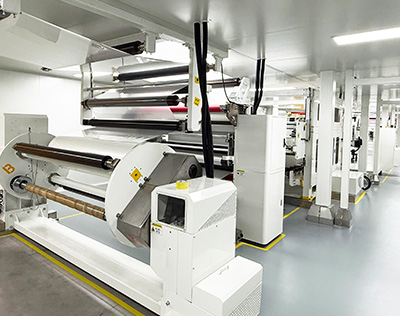
VSTONE, backed by the TOME Group, operates with vertically integrated manufacturing that covers everything from material development to finished film rolls. For B2B partners, this structure reduces uncertainty. Product performance remains consistent from order to order, the distinction between TPH and TPU lines is clear and well-defined, and supply relationships are designed for continuity rather than short-term transactions.
In a market where installer feedback travels fast and reputation compounds quickly, brand credibility becomes part of the product itself. It influences not only how a film performs, but how confidently dealers can sell, recommend, and stand behind it.
A Smarter Way Forward for Dealers
Over time, the most successful PPF dealers tend to move away from one-dimensional questions like “Which film is better?” Instead, their thinking becomes more strategic.
They focus on matching the right product to the right customer, protecting margins without overselling, and minimizing disputes that drain time, energy, and trust. From this perspective, TPU and TPH are not competing options—they are complementary tools.
When positioned correctly, TPH serves efficiency and volume, while TPU anchors premium offerings and long-term value. Together, they allow dealers to build a clearer product structure and a more resilient business model. This balanced approach is what enables PPF businesses to grow steadily, rather than chasing short-term wins at the cost of long-term stability.
If you are reviewing your current PPF lineup or considering expansion into new customer segments, understanding how TPU and TPH work together—not against each other—is a strong place to start.
You can learn more about professional paint protection solutions at
vstoneppf.com
Or connect with a VSTONE solution specialist to explore how a clearer, more structured PPF offering can support healthier margins and more confident growth in your market.